
The multi-crore fraud at the Gurgaon branch of Citibank has prompted the banking regulator to review existing norms for the portfolio management services (PMS) of banks.

Such minutes will be available within two weeks from the date of its confirmation in the next meeting of the central board and on being signed by the chairman in the same meeting, the RBI said in a statement on its website.

'The BJP lacks a credible mass leader who matches Mamata Banerjee's popularity.' 'Given the division of votes among Opposition parties, the West Bengal government's dole-giving strategy, and the consolidation of the poor, significant sections of scheduled caste groups and Muslim minorities behind the ruling party, it will be difficult to dislodge the Trinamool from power.'


Senior bankers point out that while they will eventually attract qualified professionals, onboarding them takes time.

'The committee has been constituted. Different government departments and FSDC members are part of it.'

Shane Watson turned down after the Pakistan head coach job after details of the contract were leaked to the media.

Members of Parliament, state legislatures, and local governments not eligible to be members of PSB boards
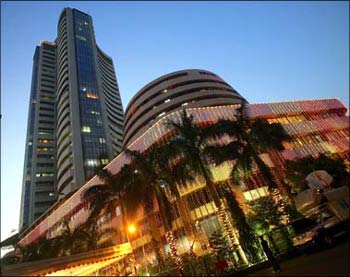
Leading stock exchange BSE has initiated a process of putting in place a new risk-based model for supervision of market entities including brokers, taking forward a new model proposed by regulator Sebi in this regard.

Khara will replace SBI Chairman Rajnish Kumar, whose three-year term comes to an end on October 7.

Reserve Bank Governor Shaktikanta Das on Wednesday said underlying economic activity in India continues to be strong, but external factors will cause some "dent" to the economy. Speaking at the BFSI Insight Summit 2022 organised by Business Standard, Das said the RBI tracks 70 fast moving indicators and most of them are in the "green box". It is the external sector, mired by a fear of recession or clear visibility about slowing growth in a large part of the world, where the challenges lie, he said, adding that the impact of external demand will "dent" the economy.

A packed beyond capacity bus carrying passengers returning to work after Diwali fell into a deep gorge in Uttarakhand's Almora district on Monday, killing at least 36 of the over 60 people on board.

Sebi's mandate restraining mutual funds, stock brokers, and other intermediaries from associating with finfluencers who do not come under the Sebi ambit will impact the earnings of finfluencers through sponsorships, tie-ups, or referral links, as these may dry up due to the restrictions.

Indian regulators have identified certain groups as 'financial conglomerates' and they are being monitored closely for any systemic risks they may pose.
RBI unveiled a few weeks ago its discussion paper on the proposed holding company structure for financial conglomerates, there were no murmurs of protest from any of the other regulators.

Cyber thieves have been using RBI logos to send out mails to cheat customers

At a time when the role of corporate boards is once again under the scanner, independent directors on the Paytm Payments Bank board have indicated that red flags were raised over regulatory issues but they may have been late in doing so. "As independent directors, we asked questions and monitored responses to the Reserve Bank of India (RBI). Many changes were made on compliances. "Obviously, in retrospect, it was not found to be enough," said one of the independent directors on the condition of anonymity.
If indeed we want the board to manage the RBI, probably the government should take a close look at the US Federal Reserve system which has a two-part structure - a central authority in Washington, DC, and a decentralised network of 12 Federal Reserve Banks located throughout the country, says Tamal Bandyopadhyay.

Officials said Sebi first proposed to the FinMin to amend the relevant provisions in the Sebi Act to discontinue RBI's representation on its board, as it already has adequate presence of government nominees and in its over 25 years of existence the regulator has evolved as an "effective and one of the best in the world".
If the new governor can think out of the box even as he signals that he can bat for the RBI cadre and respect its institutional memory, that will go a long way in getting out of the current impasse.

A historian, a retired auditor and a financial executive were among four people named by India's highest court on Monday to run the country's cricket board (BCCI).
The bank will now be in a position to resume normal lending activity, including corporate lending, with tightened risk management framework.

P2P platforms do not have the safety net. Instead of playing the role of an intermediary, if they run their own balance sheets for safety and growth, it's a recipe for disaster, warns Tamal Bandyopadhyay.
A plea has been filed in the Supreme Court seeking investigation under the supervision of a sitting apex court judge against the Adani group of companies in light of the allegations made by the US-based Hindenburg Research.

The Supreme Court on Wednesday agreed to hear on February 17 a fresh plea of a Congress leader seeking investigation under the supervision of a sitting apex court judge against the Adani group of companies in light of the allegations made by the US-based Hindenburg Research.

'If there is an RBI majority in the committee, there is no question of a veto.'

To further strengthen the supervision on non-banking entities (NBFCs), the Reserve Bank on Tuesday issued revised guidelines on a Prompt Corrective Action (PCA) framework for such companies, excluding government-owned ones, effective from October 1, 2022, on the lines of what it had introduced for banks in 2002. The RBI came up with stricter supervisory norms under the PCA framework for banks after their bad loans mounted and balance-sheets bled badly. This involved restricting them from fresh lending, brand opening and, hiring, among others. The RBI said the revised PCA framework is also applicable to all deposit-taking non-banking financial companies (NBFCs), all non-deposit taking NBFCs in the middle, upper and top layers, including investment and credit companies, core investment companies, infrastructure debt funds, infrastructure finance companies and microfinance institutions.

Believe it or not, the regulator is even stretching its arm to identify stressed borrowers and gauge the 'distance to default' as a measure of a particular bank's fragility, reveals Tamal Bandyopadhyay.

After removing three PSBs - BoI, Mahabank and OBC from the framework, RBI, on Tuesday, took out three commercial banks - Allahabad, Corporation and Dhanlaxmi from the said list.

Highly-placed sources in the government say that none of the senior ministers had any inkling of Patel's resignation

Reduce the government stake in public sector banks to 33 per cent, recommends A K Bhattacharya

Historically, the RBI has tried to keep the crooks at bay by issuing a circular a day. What it needs is more onsite supervision. Merely checking high-frequency data with the help of technology is insufficient, notes Tamal Bandyopadhyay.
Given the pressure from India Inc and the banking fraternity, it is surmised that the portfolio rejig will take place before April.
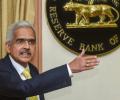
Central banking is a science, not an art, Tamal Bandyopadhyay tells RBI Governor Shaktikanta Das.

The three main regulators have different approaches to grievance redressal and different standards to stop harmful from coming pitched at the consumer.

Large urban co-operative banks may come to be solely under the provisions of the Banking Regulation Act, even as the smaller among them are to remain within the exclusive fold of the Registrar of Co-operative Societies. The upcoming changes will bring the curtains down on the vexed issue of dual control of UCBs, which has been in vogue for 54 years. The new framework will affect 1,551 UCBs in the country, which had a total business of Rs 7.36 trillion.
RBI's oversight cadre move creates HR trouble, officers threaten agitation.

'There can be no bigger compliment than people walking away, carrying the film in their hearts, and thanking you for it.'

If the policy is extended to NBFCs and co-operative banks, they will have to disclose divergence in asset classification and provisioning during RBI inspections in their audited financial reports. Till now, these entities have been exempted from this. At present, there are more than 98,000 co-operative banks and 10,000 NBFCs. Sources said the RBI would concentrate on the top 50 co-operative banks and NBFCs.
